11.3 Chalukyas of Badami aka Western Chalukyas
Chalukyas of Badami
Chalukyas were 3 dynasties who ruled from 6th to 12th century AD.
- Chalukyas of Badami that ruled from Vatapi/ Badami as their capital who rose after Kadambas of Banavasi declined.
- Chalukyas of Vengi aka as the Easter Chalukyas who rose after the death of Pulakesin II when the empire was divided among other heirs.
- Chalukyas of Kalyani near modern day Basavakalyan ruled until the 12th century.
Origin of Chalukyas
- Claimed Brahmana origin as Hariputras of Manavaya gotra.
- DC Sircar, John Keay etc have given out the indigenous origin theory as Chalukyas being native to Karnataka region.
- Other theories call then descendents of Andhra Ikshvakus or from the Kadambas of Banavasi.
- Eastern Chalukya inscription have claimed them to be descendents of rulers from Ayodhya who came south-
Sources for Their Study
- Badami cave inscriptions of Pulakesin and other previous emperors such as Mangalesha.
- Kanchi Kailasnath Temple inscription of Vikramaditya II in Kannada language.
- Aihole inscription of Pulakeshin II in Sanskrit in Kannada script.
- Xuanxang mentions Pulakeshin II he visited his court.
Aihole Inscription
- first capital of Chalukyas
- found at Meguti Temple dated 634-35 CE.
- Sanskrit language and Kannada script
- mention about defeat of Harshavardhana by Pulakeshin II
- also mentions about the shifting of capital from Aihole to Badami
- written by Ravikirti, court poet of Pulakeshin II describes himself as equal of Kalidasa and Bhasa.
- Talks about subduing kingdoms such as Konkans, Orissa, Banavasi, Latas, Malavas and Gurjaras.
- Prashasti has equalled Pulakeshin II to Indra.
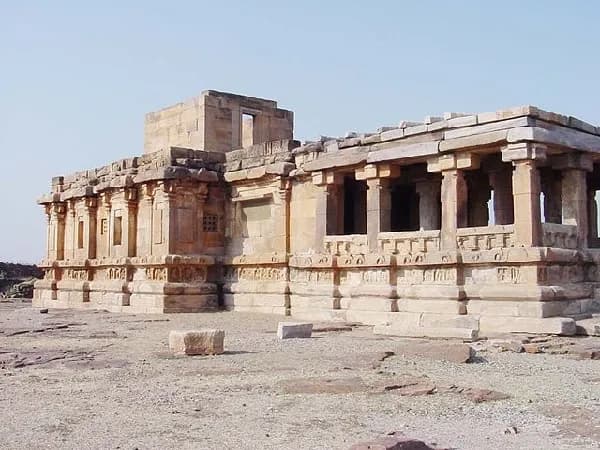
Early Rulers
- Pulakesin I established a sovereign empire from Badami in 543-44 AD
- supplanted the Kadambas and Mauryas of Konkan
- Other dynasties like the Western Gangas, Latas, Malavas and Gurjaras offered submission to him
- Kirtivarman I succeeded him.
- Pulakesin II checked advance of Harshvardhan, also defeated Vishnukundins of Andhra delta
- Vishunvardhana his younger brother formed his own kingdom at Vengi aka Eastern Chalukyas.
- Vikramaditya III won victories over Pallavas and Pandyas as well as Gangas, Rashtrakutas, Kalachuris etc
- Bhima was captured but later released
Temples in Bagalkot/ Architecture of Chalukyas
- Virupaksha temple combines both Nagara and Dravida style was built by Lokamahadevi** to commemorate conquest of Kanchi by Vikramaditya II's wife LokMahadevi, eulogises the architect as well
- Papanatha Temple : Shikhara in Nagara style, wall depict scenes of Ramayana also has name of the designers, sculptors
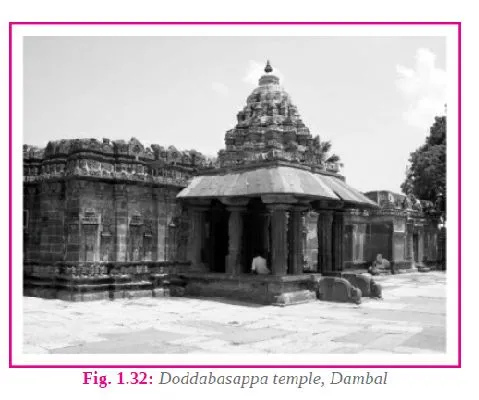
Vesara School Aka Known as Karnataka School Art of Chalukyas of Badami
- combined features of both Nagara school and Dravidian school.
- Patronised under the Chalukya rulers.
- Emphasis on vimana and mandapa
- Open ambulatory passageway
- Pillars, doorways and ceilings - intricately carved
- Other dynasties who followed this were Rashtrakutas → Kailasa at Ellora; Hoysalas → Halebidu, Belur
- Curvilinear Shikhara and square base was adopted from Nagara style
- Intricate carvings, design of Vimana and step or terraced Shikhara were adopted from Dravida style
- Shilpashastras were written during this time which mentions the 3 types of temples (Nagara b/w Himalayas and Vindhyas), Dravida (b/w Krishna and Kaveri) and Vesara (Vindhya and Krishna)
- Have signatures of architects ex in Pattadakkala temple mentioning Gunda as the sutradhari.
- Papanatha temple has details of architect Revadi Ovajja belonging to guild of Sarvasiddhi acharyas same as Pattadakal temple. Sculptors Baladeva and Devarya have also been mentioned. Hardy : Nagar and Dravida should be understood as architectural languages. KarnatakaDravida term is better than Vesara
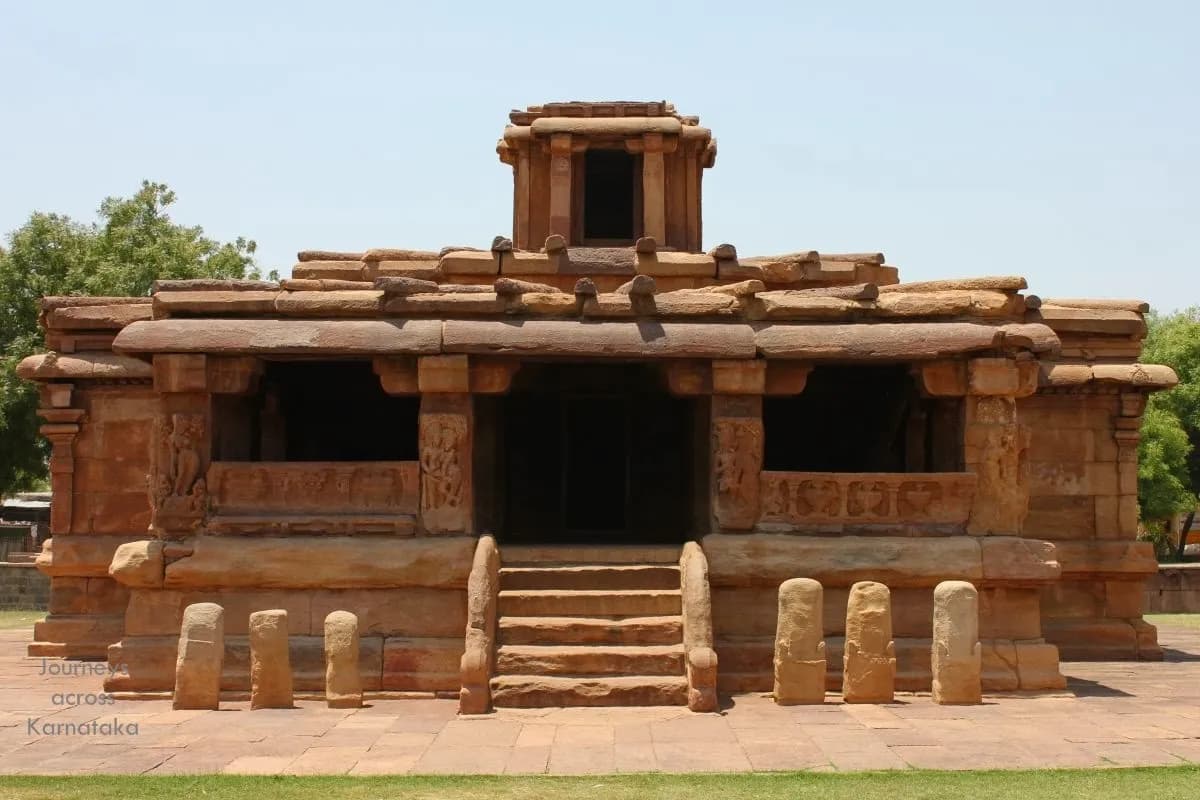
Lad Khan Temple
- Was used as base of operation by Lad Khan
- Panchayatan style dedicated to Shiva
- Garbhagriha (inner sanctum) has a Shiva linga and a mukha mandap that leads to a Sabha Mandap(hall). Maha Mandap (great hall) has open windows.
- Mukha Mandap has a pillared hall. Both outer and inner walls have carvings on them.
- It does not have a shikhara
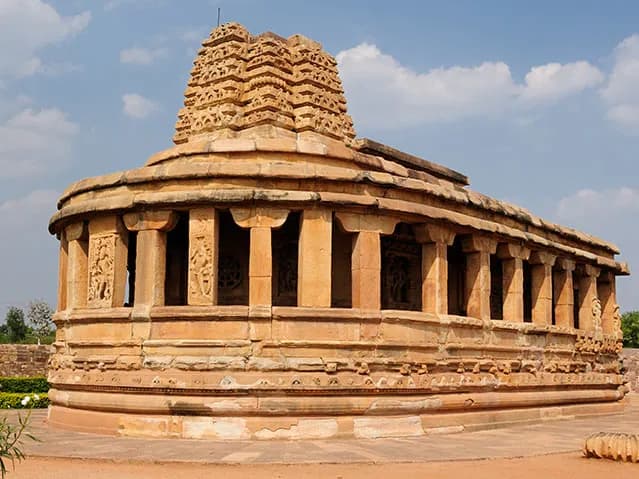
Durga Temple
- It has images of Vishnu and Shiva and could be dedicated to either one of them.
- Large pillared hall (peristyle) around an ambulatory passageway.
- Consists of an apsidal garbhagriha, sabhamandapa, mandap, 2 pradakshinapathas.
- Erotic sculptures have been found in on of the pillars of mukhamandap.
- Various other motifs belong to Ramayana, Ardhanariswara and Narsimha killing Hinranyakashyapa.
- Dvarpalas, Yamuna and Ganga etc are found on front entrance.
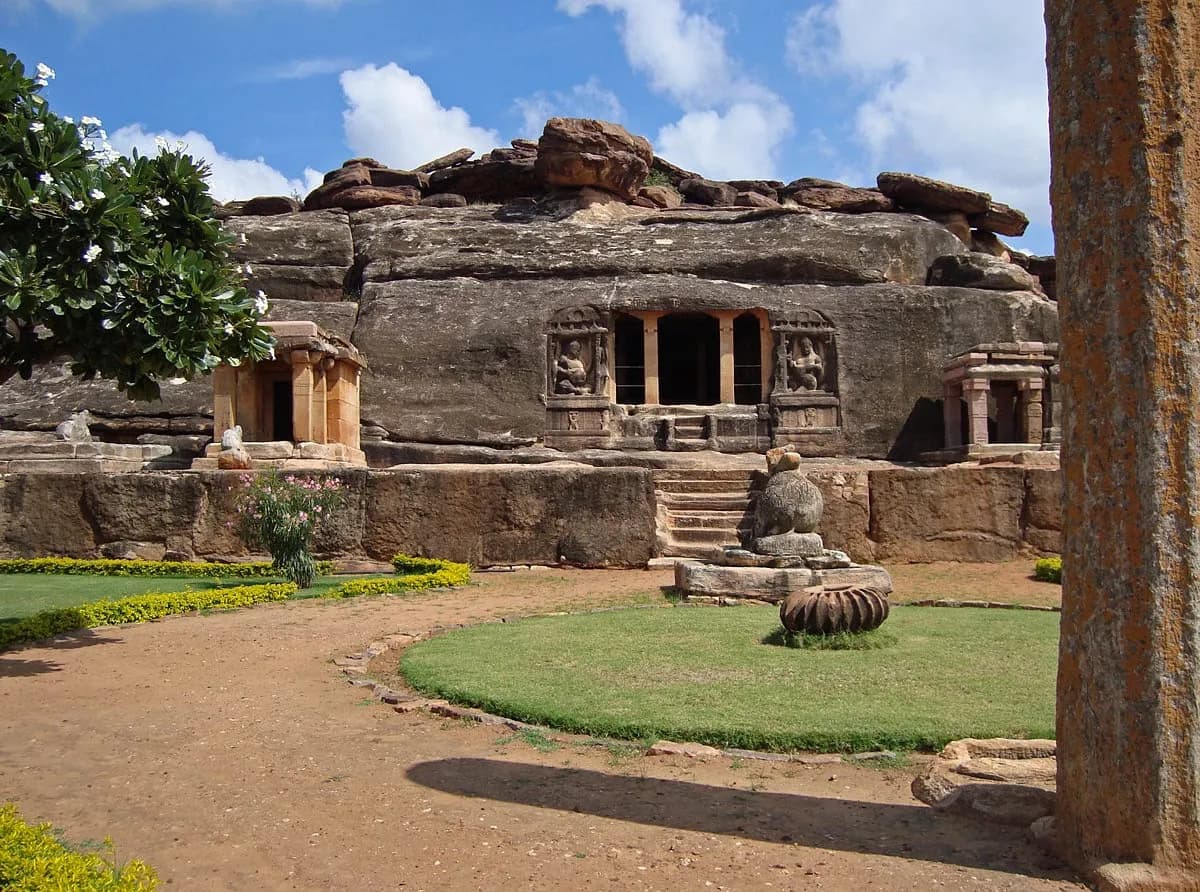
Ravanphadi Caves
- Oldest rock cut caves in the region. Entrance has a fluted gateway.
- Seated Nandi facing temple sanctum with several monuments.
- Motifs are Ardhanarishwara, Nataraja/Shiva with Parvati, Saptamatrika, Ganesha and Kartikeya etc.
- Main mandaps have Vishnu Varaha avatar and Mahishasurmardini.
Polity and Administration of Chalukyas
- Performed vedic sacrifices
- Theory of origin from Seleucids Bilhana associates them w/ Ayodhya
- Vamsika Prashasti resembles as full-fledged successors of Kadambas
- Called himself Maharaja or Dharmamaharaja, high sounding titles like Parambhattaraka, Parameswara
- Hereditary Monarchy
- Hierarchical king assisted by Mantrimandali, Baladhikrita, Dandanayaka, Mahaprachanda?
- Amatyas : revenue officials
- Samatas : ruled over outer fringes
- Kingdom div into and headed by Rastras - Rashtrapati, Vishaya - Vishayapati, Bhukti - Bhogapati, Grama - Grambhogikas
- Land rev in direct-indirect tax, high incidence of taxation, collected in Kind,
- Agrahara gifts, Ghatikas.
- In the Deccan the Mahajanas took part in the local administration of villages during Chalukya times.
Religion of Chalukya :
Views
LN Swamy : C expansion gave rise to manifold cultural expansions
https://www.historytuitions.com/regional-states-of-india/chalukyas-of-badami/religion-of-chalukyas.html -> link not working
Embedded from 11.2 Pallavas › Conflict b/w Chalukyas - Pallavas and also Pandyas
MainsPYQ
Views
KAN Sastri : From the middle of 6th century AD history of South India is story of mutual conflict among three powers
- Tungabhadra natural boundary fertile rice growing region, high land revenue, prestige, political supremacy -> this is the reason Why? hostility started b/w Pallavas and Chalukyas.
- Hostility started during Mahendravarmans reign.
- Pulakesin II's Aihole inscription - he defeated Mahendravarman, P ceded northern areas to him
- Narsimhavarman I
- Defeated Pulakesin II who died in battle in AD 642 w/ help of prince of Sri Lanka Manavarma,
- Occupied Vatapi and assumed the title of Vatapikonda
- Mahendravarman II succeeded was defeated by Chalukya king Vikramaditya I
- Paramesvara Varman I won against Chalukyas - Udayendram Plates
- Chalukya king Vikramaditya II in 733 AD is said to have run over Kanchi for over 3 times. Pallavas were completely routed and were no longer a threat. A century later they were wiped out by the Cholas.
- Significantly weakened both Kingdoms Chalukyas were wiped by Rashtrakutas around 750 CE
- Pandyas were a third party to the war they sided with Vikramaditya II to defeat the Pallavas.
- led to new rivalry b/w Rashtrakutas and Pallavas.